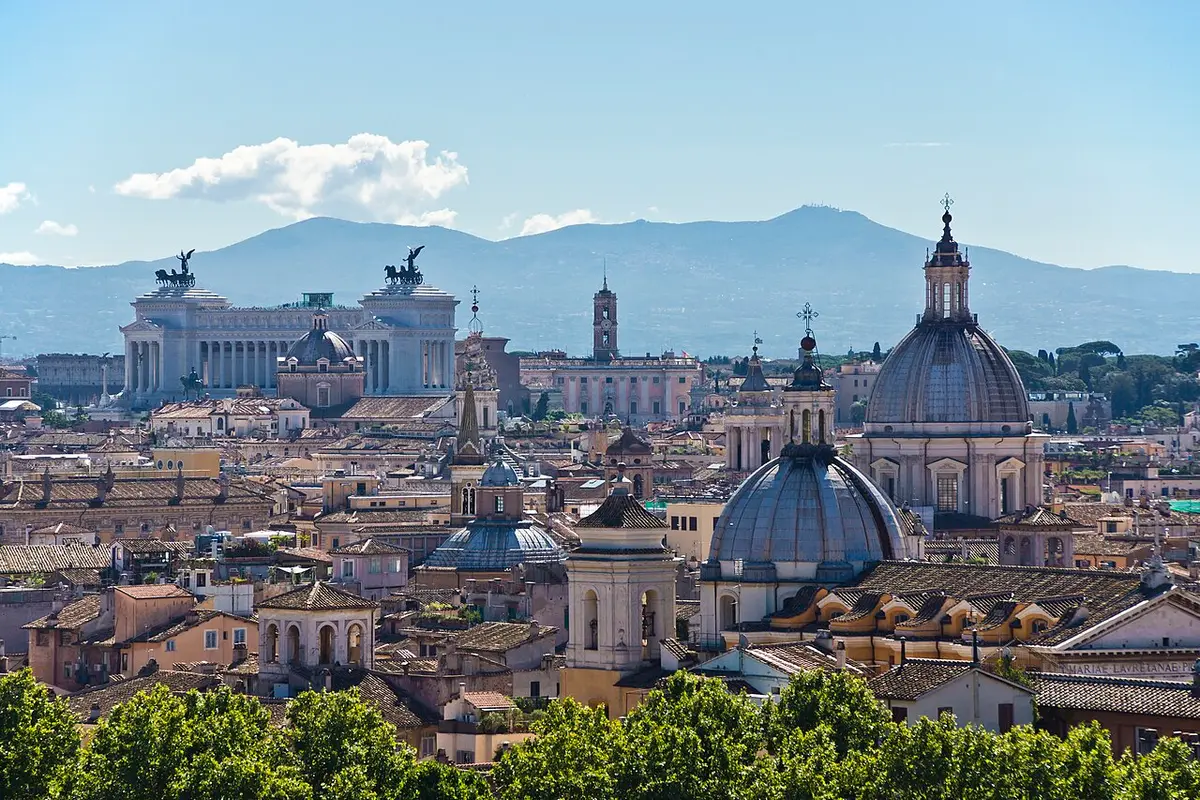
Rome is the capital and largest city of Italy. It is also the administrative centre of the Lazio region and of the Metropolitan City of Rome. A special municipality named Roma Capitale with a population of 2.7 million in an area of 1,287.36 km2 (497.1 mi2), Rome is the third most populous city in the European Union by population within city limits. The Metropolitan City of Rome Capital, with a population of 4.2 million, is the most populous metropolitan city in Italy. Its metropolitan area is the third-most populous within Italy. Rome is located in the central-western portion of the Italian Peninsula, within Lazio (Latium), along the shores of the Tiber Valley. Vatican City—the smallest country in the world and headquarters of the worldwide Catholic Church under the governance of the Holy See—is an independent country within Rome's municipal boundaries, the only existing example of a country within a city. Rome is often referred to as the "City of Seven Hills" due to its geography, and also as the "Eternal City". Rome is generally considered to be one of the cradles of Western civilization and Western Christian culture.
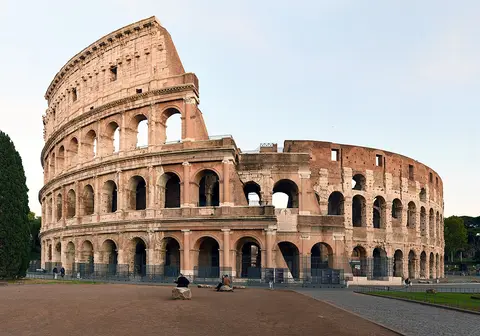
The Colosseum is an elliptical amphitheatre in the centre of the city of Rome, Italy, just east of the Roman Forum. It is the largest ancient amphitheatre ever built, and is the largest standing amphitheatre in the world. Construction began under Emperor Vespasian in 72 and was completed in AD 80 under his successor and heir, Titus. Further modifications were made during the reign of Domitian. The three emperors who were patrons of the work are known as the Flavian dynasty, and the amphitheatre was named the Flavian Amphitheatre by later classicists and archaeologists for its association with their family name (Flavius).
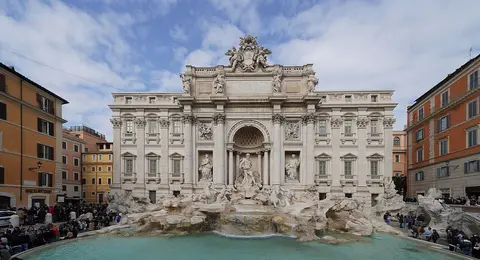
The Trevi Fountain is an 18th-century fountain in the Trevi district in Rome, Italy, designed by Italian architect Nicola Salvi and completed by Giuseppe Pannini in 1762. Standing 26.3 metres (86 ft) high and 49.15 metres (161.3 ft) wide, it is the largest Baroque fountain in the world and one of the most famous fountains in the world.
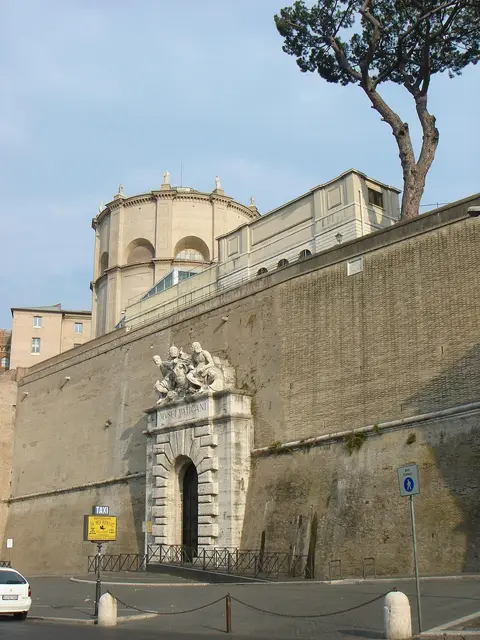
The Vatican Museums are the public museums of the Vatican City. They display works from the immense collection amassed by the Catholic Church and the papacy throughout the centuries, including several of the best-known Roman sculptures and most important masterpieces of Renaissance art in the world. The museums contain roughly 70,000 works, of which 20,000 are on display, and currently employ 640 people who work in 40 different administrative, scholarly, and restoration departments.
 Sawadeeka